From first call to crew-ready job.
Emergency work moves fast. Your intake process should too.
RestorationOps helps restoration companies clean up the path across new-loss intake, after-hours calls, missed-call recovery, dispatch handoff, estimate follow-up, customer updates, and CRM visibility.
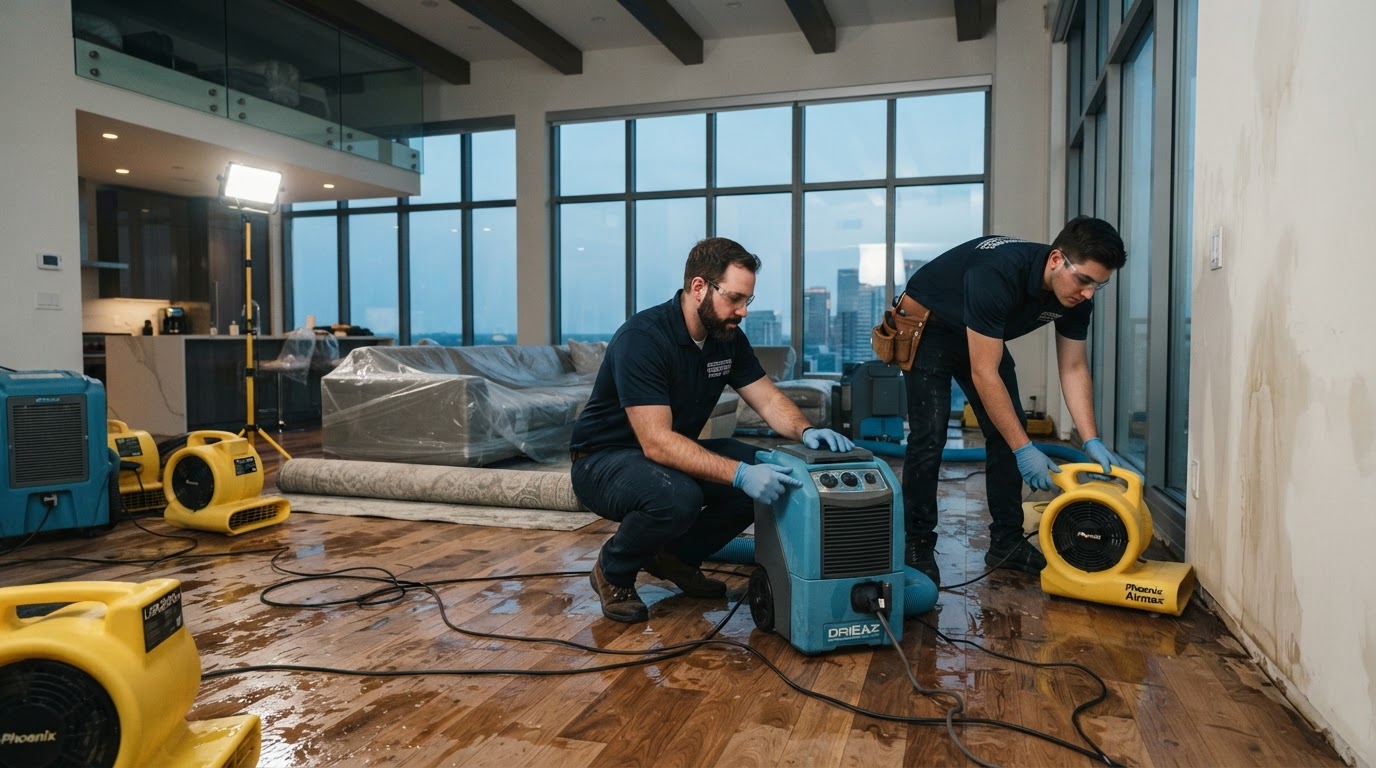
The job can go wrong before anyone reaches the property.
A lead can arrive through a phone call, website form, referral, after-hours inquiry, existing customer, commercial contact, or another source. Then the business still has to decide:
That is the operating layer RestorationOps focuses on: building clean infrastructure around caller triage, context transfer, dispatch execution, and client transparency.
The job starts before the crew arrives.
From the initial phone ring to the closed-out file, clean operations eliminate rediscovered data, lost voicemails, and blind spots.
Capture
Get the essential caller, property, loss, service, and urgency information into one owned path.
Classify
Separate emergency loss, routine inquiry, existing job, estimate request, and non-service calls.
Route
Send the right request to the right person, calendar, dispatch path, or follow-up queue.
Handoff
Give dispatch, inspection, estimating, or operations the context required for the next action.
Follow through
Keep missed calls, estimates, customer updates, and unfinished work visible until the loop is closed.
Where restoration intake gets messy.
After-hours means voicemail.
Urgent and routine calls land in the same place with no defined ownership.
Dispatch gets half the story.
The caller already explained the loss, but the field team still has to rediscover the important details.
Missed calls disappear.
The phone log shows the call, but no task, callback owner, or final outcome exists.
Every inquiry treated like an emergency.
Routine estimates, existing jobs, customer questions, and urgent losses compete for the same attention.
Estimate follow-up is inconsistent.
The estimate is sent, then the next action depends on who remembers.
Customers call for updates.
The business has information, but the next step is unclear, so customers call the office or field team for status.
Fix the path around the field work.
Emergency Intake
Capture the essential information without turning the first call into a field inspection.
After-Hours Calls
Separate urgent losses from requests that can wait.
Dispatch Handoff
Pass useful context from intake to the next owner.
Missed-Call Recovery
Give unanswered calls an owner and a next action.
Estimate Follow-Up
Keep open estimates visible without relying on memory.
Customer Updates
Create clearer communication around inspections, appointments, estimates, and next steps.
Different loss types create different operating paths.
Water Damage
Emergency response, extraction, drying, inspection, and customer expectations create a fast intake journey.
Fire & Smoke
Complexity, access, stakeholders, property condition, and next-step coordination require a controlled first handoff.
Mold
Qualification, inspection, documentation, scheduling, and service boundaries create a different path.
Commercial Restoration
Commercial contacts, access, sites, urgency, documentation, and multiple stakeholders require clearer routing.
See where your operating path may be weak.
The Free Restoration Ops Score asks 10 questions across intake, urgency, dispatch handoff, follow-up, and visibility.
The goal is not more software.
A restoration company can already have phones, CRM, estimating software, production software, calendars, email, SMS, and forms and still have a weak intake path.
RestorationOps starts with what should happen operationally. The Quiet Protocol can then help connect the systems required to support that path.

Frequently Asked Questions
Is RestorationOps a restoration contractor?
No. RestorationOps focuses on the operating infrastructure around restoration intake, routing, handoffs, follow-up, and customer communication.
Do you replace our restoration software?
Not necessarily. Existing phone, CRM, calendar, estimating, or production tools can stay where they work.
Do you provide a call center or AI receptionist?
Not as part of the standard RestorationOps work. Those services would require separate scope if ever needed.
Do you manage insurance claims?
No. We do not adjust claims, negotiate coverage, perform estimating, or act as a TPA.
Is the Restoration Systems Review a full consulting engagement?
No. It is an initial systems review to understand the current setup, identify obvious friction, and determine whether implementation support makes sense.
Can you work with multi-location companies?
Yes. Larger or multi-location environments can be discussed during the review.
See the handoff before you add another tool.
Book a Restoration Systems Review and show us how the current process works.